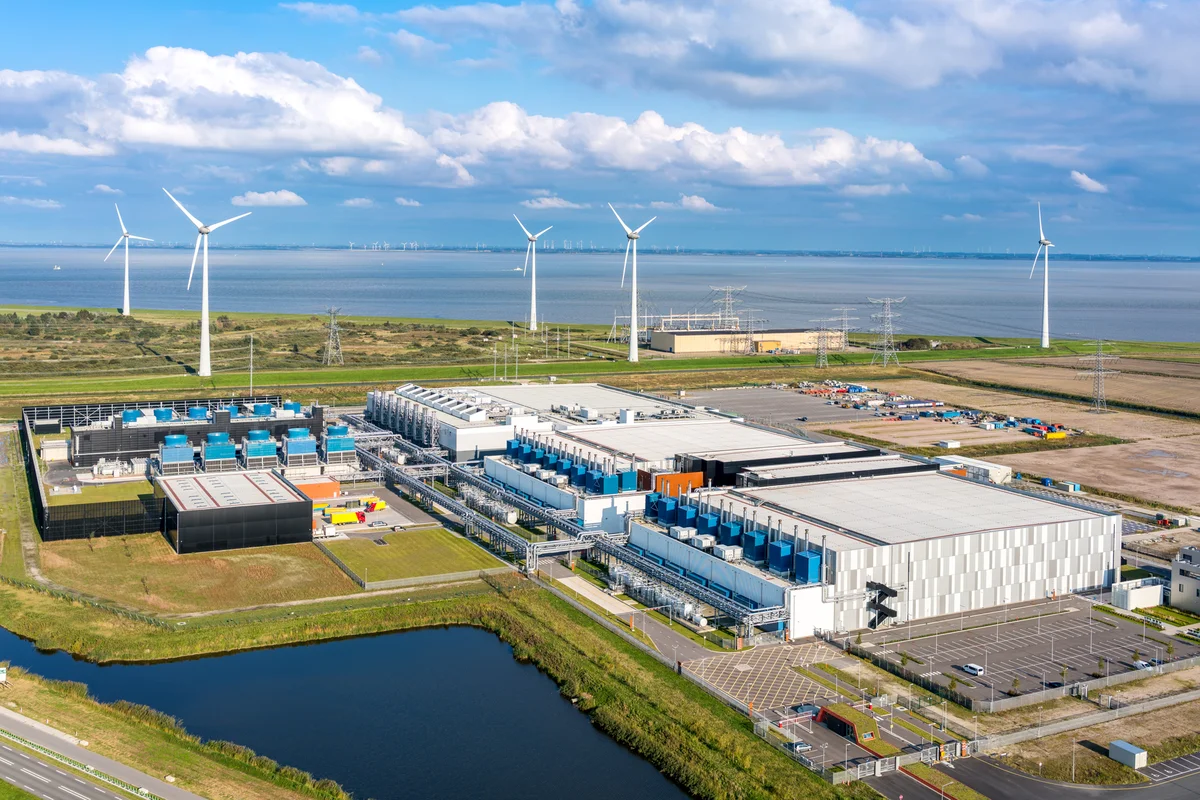

As artificial intelligence continues its meteoric rise, the backbone supporting it—data centers—is facing an unprecedented challenge: skyrocketing energy demands. With AI models growing more complex and data-intensive, projections indicate that global electricity consumption for data centers could double from 2022 levels by the end of 2026, reaching around 600 terawatt-hours (TWh) annually. By 2030, this could climb to nearly 1,000 TWh, equivalent to the power usage of entire countries like Japan or Germany. In the US alone, data centers are expected to consume up to 75.8 gigawatts (GW) in 2026, surging to 108 GW by 2028. This surge is largely driven by AI, which could account for 35-50% of data center power use by 2030, up from 5-15% today.
But amid this energy crunch, 2026 is shaping up to be a pivotal year for green technology innovations. Data centers are evolving from power-hungry behemoths into efficient, sustainable hubs through advancements in cooling, renewable integration, and novel designs. This blog dives deep into these trends, exploring how the industry is balancing AI’s insatiable appetite with environmental responsibility. Drawing from expert insights and recent reports, we’ll uncover the strategies that could make sustainable data centers the norm rather than the exception.
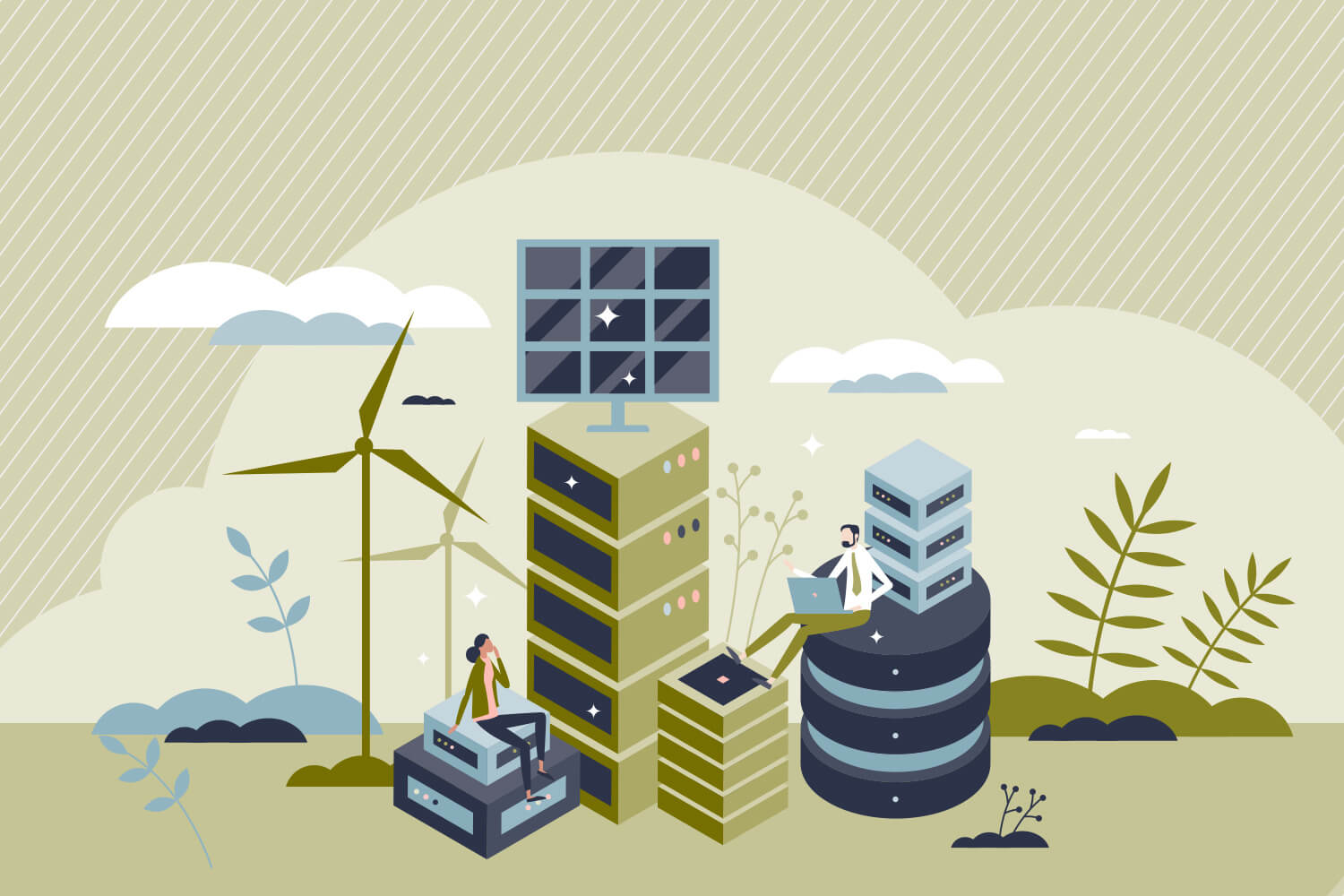
The Energy Dilemma: Why AI is Straining the Grid
AI’s computational demands are immense. Training a single large language model can consume as much electricity as hundreds of households over a year, and inference—the day-to-day use of these models—adds up quickly. According to the International Energy Agency (IEA), global data center electricity demand could double between 2022 and 2026, fueled primarily by AI and cloud computing. In the US, data centers already account for about 4% of total electricity use as of 2024, with projections showing this doubling by 2030.
This growth isn’t just a numbers game; it’s straining aging power grids, especially in tech hubs like Northern Virginia and Silicon Valley. Explosive data center expansion, driven by AI, is clashing with land and energy constraints in Europe and the US. Major players like Alphabet, Amazon, Microsoft, and Meta are investing heavily—over $350 billion in 2025 and $400 billion in 2026—to build and upgrade facilities. Without sustainable interventions, this could lead to increased carbon emissions, higher operational costs, and regulatory backlash.
To illustrate the trajectory, here’s a projected global data center electricity consumption chart based on Gartner estimates:
This linear projection from 448 TWh in 2025 to 980 TWh in 2030 highlights the urgent need for efficiency gains.
Cooling Innovations: From Air to Liquid and Beyond
Cooling accounts for up to 40% of a data center’s energy use, making it a prime target for sustainability. In 2026, liquid cooling and immersion technologies are set to dominate, especially for high-density AI workloads.
- Liquid Immersion Cooling: Servers are submerged in non-conductive fluids that absorb heat more efficiently than air. This can reduce energy use by 30-50% and enable higher server densities. Companies like Intel and NVIDIA are optimizing chips for immersion, with pilots showing dramatic efficiency gains.

- AI-Optimized Chips and Neuromorphic Computing: Edge AI and neuromorphic processors mimic the human brain’s efficiency, slashing power needs for specific tasks. These are increasingly deployed in hybrid setups, where AI workloads run closer to data sources like factories or hospitals to minimize transmission losses.
- Thermal Density Management: With AI pushing rack power to 100kW+, advanced cooling like direct-to-chip liquids will be standard, allowing data centers to handle more compute without expanding footprints.
These technologies not only cut energy but also extend hardware life by reducing thermal stress.
Renewable Integration and Hybrid Energy Mixes
Renewables are no longer optional; they’re essential. In 2026, data centers are embracing hybrid energy systems combining solar, wind, and battery storage for greater autonomy and resilience.
- On-Site Renewables and PPAs: Power Purchase Agreements (PPAs) with renewable providers are booming. Google and Microsoft aim for 24/7 carbon-free energy, matching hourly demand with clean sources. Advanced storage solutions, like long-duration batteries, stabilize grids amid fluctuating renewables.
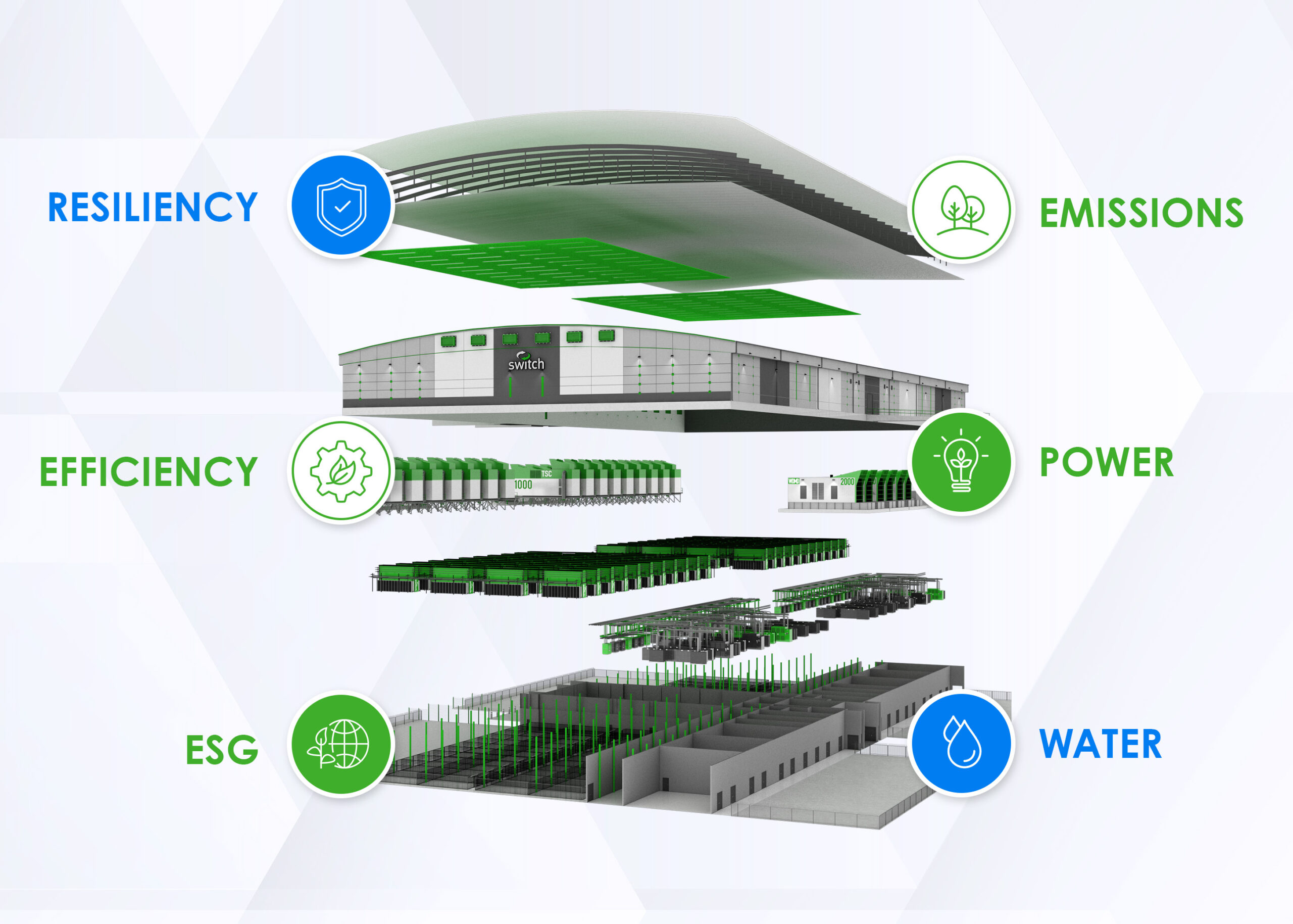
- AI-Enabled Energy Optimization: Ironically, AI itself is optimizing data centers. Machine learning algorithms predict workloads, adjust cooling dynamically, and shift tasks to off-peak hours or greener regions, potentially saving 10-20% on energy.
- Circular Economy Practices: From using green concrete and steel to implementing carbon credits, operators are focusing on low-carbon materials. Recycling e-waste and modular designs allow for easier upgrades without full rebuilds.
Hyperscalers are leading: Amazon’s AWS targets 100% renewable energy by 2025 (already achieved in some regions), while new regulations in the EU and US mandate reporting and efficiency standards.
Novel Designs: Underwater, Space-Based, and Modular Centers
Pushing boundaries, 2026 sees experimental designs addressing land and energy constraints.
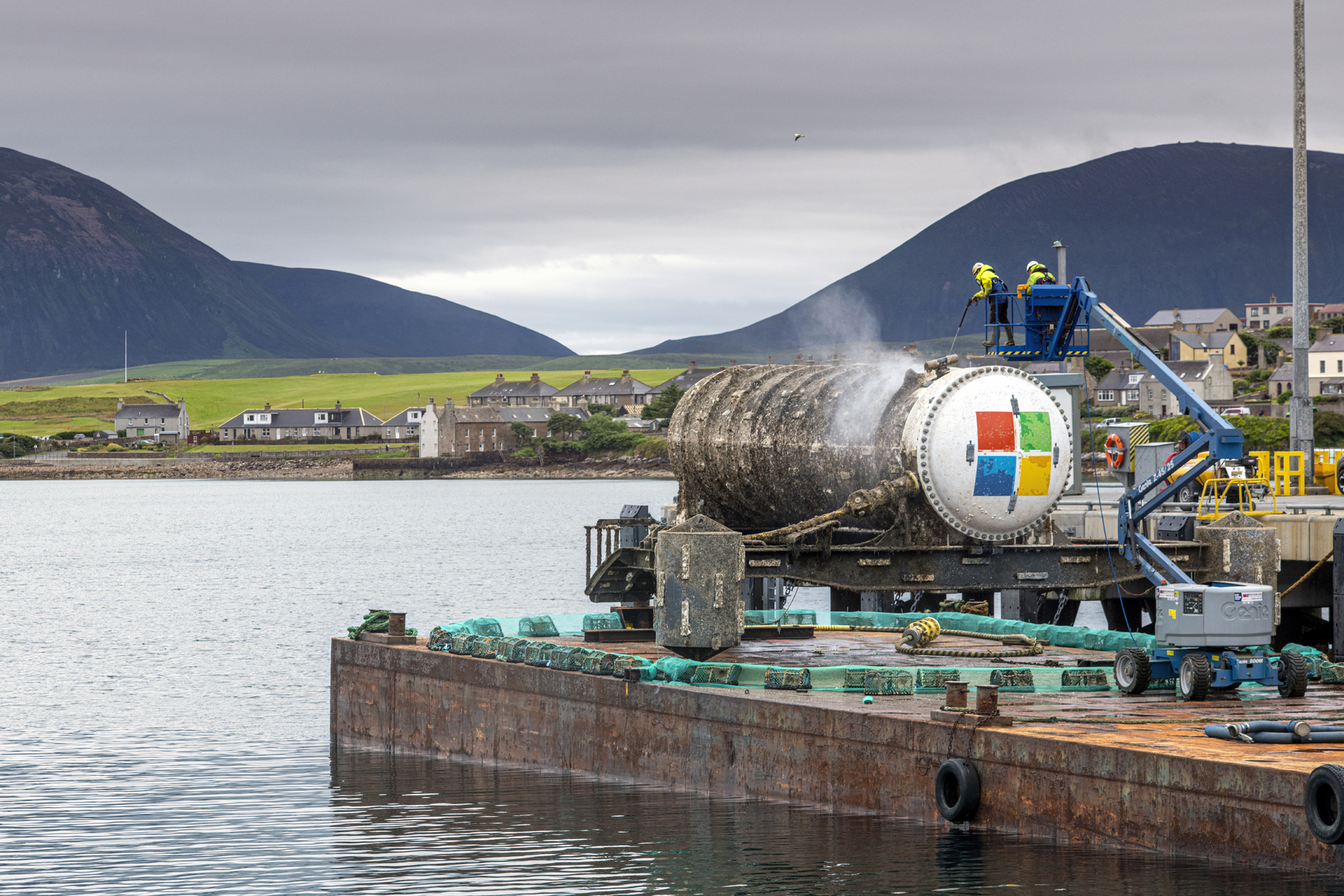
- Underwater Data Centers: Microsoft’s Project Natick proved underwater pods can leverage ocean cooling, reducing failure rates and energy use. Expect scaled deployments in coastal areas for natural, passive cooling.
- Space-Based Concepts: Startups are exploring orbital data centers powered by endless solar energy, beaming data via lasers. While early-stage, this could offload AI processing from Earth-bound grids.

- Modular and Edge Facilities: Prefab modules enable rapid deployment in underutilized spaces, while edge computing distributes loads, cutting transmission energy.
These innovations promise to make data centers more resilient to climate events and grid failures.
Industry Commitments, Regulations, and Challenges
Big tech is committing to carbon-neutral operations, with ESG (Environmental, Social, Governance) metrics influencing investments. Regulations are tightening: The EU’s Energy Efficiency Directive requires data centers over 500kW to report usage, while US states incentivize green builds.
Challenges remain—supply chain issues for rare earths in batteries, high upfront costs, and ensuring equity in energy access. However, the payoff is clear: Sustainable centers lower long-term costs and enhance reputation.
Looking Ahead: A Greener AI Future
In 2026, green tech isn’t just mitigating AI’s impact—it’s enabling its growth. By prioritizing efficiency, renewables, and innovation, the industry can achieve sustainable scale. As utilization rates rise to 69% with AI taking 40% of workloads, the focus shifts to human-centric design and ethical AI deployment.
The message is clear: Sustainability is essential for AI’s longevity. Businesses ignoring it risk obsolescence, while those embracing it will lead the next wave of innovation.
What are your thoughts on these trends? Would underwater data centers excite or concern you? Share in the comments below!