
As we step into 2026, the technology landscape is evolving faster than ever. What was once hype is now becoming reality: AI is moving from passive tools to active agents, quantum computing is inching toward practical advantage, and innovations in robotics, autonomous systems, and even space-based infrastructure are redefining what’s possible. Drawing from reports by Gartner, Deloitte, IBM, and others, here are the key trends that will dominate the year ahead.


1. Agentic AI Takes Center Stage
2026 marks the shift from generative AI to agentic AI—systems that don’t just respond to queries but autonomously plan, execute tasks, and collaborate with humans. Experts predict widespread enterprise adoption, with AI agents handling end-to-end workflows in areas like customer service, software development, and supply chain management.
Companies like OpenAI and Microsoft are leading the charge, integrating agents into everyday tools. This “human-AI chemistry” will augment jobs rather than replace them, making work more strategic and less mundane. However, challenges around reliability, governance, and security will be front and center.
2. Quantum Computing Reaches “Advantage” Milestone
One of the most anticipated breakthroughs: IBM and others forecast quantum advantage in 2026, where quantum systems outperform classical computers on specific real-world problems. Advances in error correction, neutral-atom platforms, and hybrid quantum-classical setups are accelerating progress.
Applications in drug discovery, materials science, and financial optimization are on the horizon. While full fault-tolerance is still years away, 2026 will see small-scale logical qubits and utility demonstrations that prove quantum’s commercial potential.


3. Rise of Humanoid Robots and Edge AI
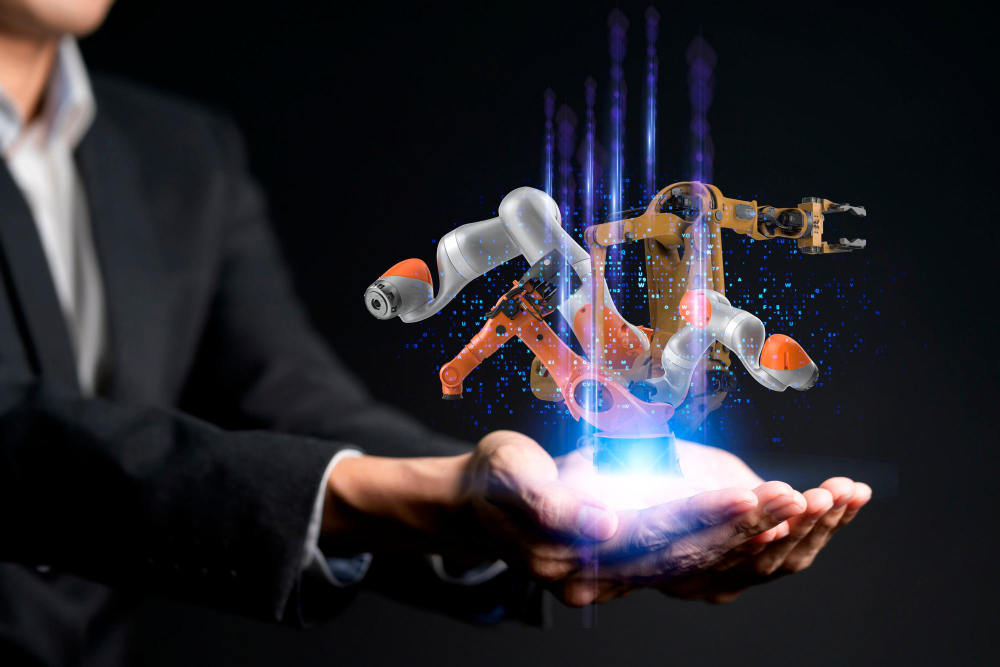
Humanoid robots are no longer sci-fi. With companies like 1X and Figure deploying early models, 2026 will see robots entering homes, factories, and warehouses for tasks like household chores and industrial inspection.
Powered by edge AI (processing on-device for faster, privacy-focused performance), these systems will benefit from neuromorphic chips and multimodal models. Folding phones, smart glasses (possibly from Apple), and AR/VR integration will further blur digital and physical worlds.
4. Autonomous Vehicles and Mobility Revolution
Self-driving tech expands globally in 2026, with robotaxis from Waymo, Cruise, and Chinese firms like WeRide rolling out in new cities across Europe and Asia. Level 4 autonomy—full self-driving in specific conditions—becomes more common.
Combined with early 6G trials and ultra-low-latency networks, this paves the way for coordinated autonomous fleets and holographic communication.
![Future of Autonomous Vehicles [2026-2035] | StartUs Insights](https://www.startus-insights.com/wp-content/uploads/2025/11/Future-of-Autonomous-Vehicles-SharedImg-StartUs-Insights-noresize.webp)

5. Sustainability, Space Tech, and New Frontiers
Data centers proliferate worldwide to fuel AI, sparking talks of orbital facilities for cooling and energy efficiency. On Earth, clean energy breakthroughs like solid-state batteries and CO2-utilizing tech gain traction.
Space highlights include NASA’s Artemis II lunar flyby, China’s Chang’e 7 mission, and private ventures in orbital manufacturing. These aren’t just explorations—they’re solving Earth-bound problems like resource scarcity.
Looking Ahead
2026 isn’t about isolated gadgets; it’s about interconnected systems that amplify human potential. From preemptive cybersecurity to bio-digital convergence, the focus is on responsible, scalable innovation.
As AI narrows the gap between promise and reality, one thing is clear: technology in 2026 will be more integrated into daily life than ever before. Stay tuned—the best is yet to come.
What trend excites you most for 2026? Share in the comments!